Unit 1 home
CLASS 5 · PART C JAVA LEARNS TO LISTEN? NO — TO SPEAK FOR ITSELF UNIT I · UI24PC320CS
CLASS 5 · P 1/12PGDN NEXT POINT · PGUP BACK

UI24PC320CS · OOP THROUGH JAVA · UNIT I · PART C BEGINS · CRIMSON

Why Java exists —
from the man who built it.

Parts A and B made you write and run Java. Part C answers the question you've earned the right to ask: why is this language shaped the way it is? Four classes: the story and the promises today, then the JVM's rooms, then its engine, then your own first real class.

C5 · GOSLING + BUZZWORDS C6 · JVM ARCHITECTURE C7 · EXECUTION ENGINE C8 · YOUR FIRST REAL CLASS
PART-C SPINEHyderabad IT industry — HITEC City · WORA in a real company setting
TODAY'S SPANGosling 1991–1995 · the WORA quote · 12 buzzwords · Java vs 3 rivals
ACTIVITIES2 locked activities — notebook first, always
PROOF IN HANDLab 0's .class file already ran unchanged on two different lab machines

You've earned this class: in Lab 0 you compiled HelloStudent.java once and the same .class file ran on your Windows lab PC and your friend's MacBook without touching the source. Nobody stopped to ask how that's even possible. Today the man responsible gets to explain himself.

CLASS 5 · THE ROAD FOR TODAY

One story, one promise, twelve words.

No new syntax today — and that's deliberate. After four classes of typing, this hour explains why the language you've been typing is built this way. Everything here is repeat exam material: history short-answers and buzzword questions appear nearly every year.

BY THE END OF TODAY YOU CAN

  • explainwhere Java came from — Green Project, Oak, 1995 — and why "write once, run anywhere" was worth inventing a whole language for
  • matcheach of the 12 buzzwords to a one-line real scenario — the exact shape the exam uses
  • connectone app on your own phone, or one HITEC City employer's product, to the buzzword that explains why Java suited it

WHERE THIS SITS

TODAY'S ROAD · 6 TOPICS ACROSS 12 PARTS

  • The evolution — Green ProjectOakJava, 1991 to 1995STORY
  • Gosling in his own words — the WORA quote1 SENTENCE
  • The 12 buzzwords — Sun's official promises, four at a timeEXAM CORE
  • Java vs C++ vs Python vs C# — one honest tablePYQ SHAPE
  • Where Java runs today — Android, Spring Boot, big data2026 REAL
  • "Freshers get asked this" — 3 interview questions, answeredCAREER

CLASS 05 OF 60 · 13 ROSTER PAGES · ZERO ASSETS TO DOWNLOAD · NO PROGRAMS TODAY — IDEAS CLASS · NEXT: C6 · THE JVM'S ROOMS

PART 3 · 1991–1995 · SUN MICROSYSTEMS

A language born angry at porting.

Java wasn't invented for the web — the web barely existed. It was invented because in 1991, writing software for gadgets meant rewriting it for every different chip. One engineer decided that was a design flaw of the whole industry, not a fact of life.

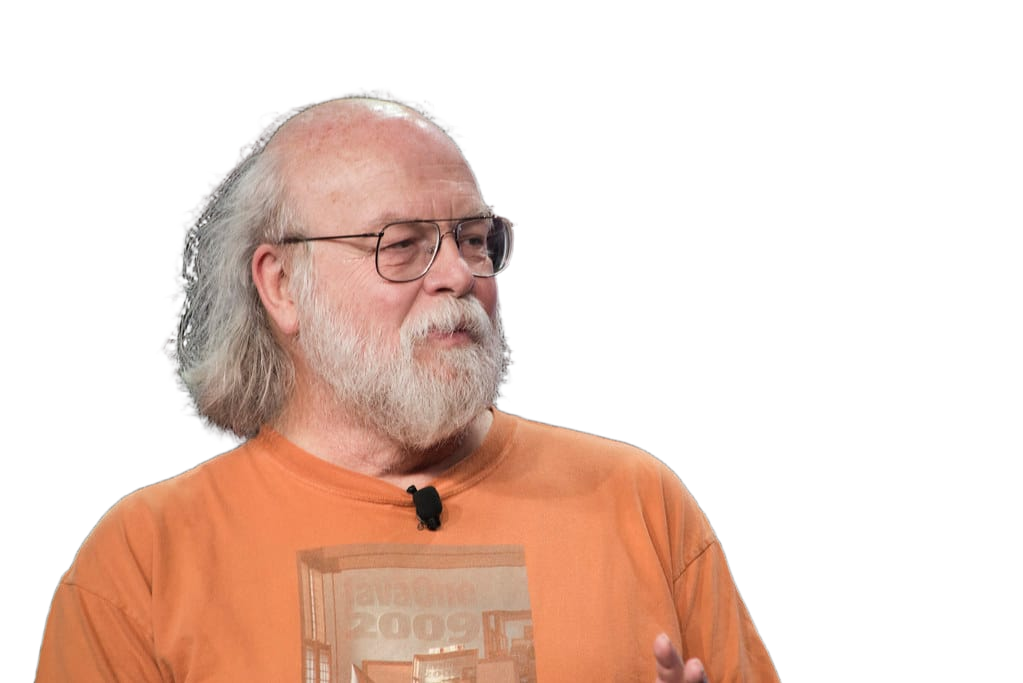
James Gosling, the creator of the Java programming language

James Gosling

CREATOR OF JAVA · SUN MICROSYSTEMS · "THE FATHER OF JAVA"

WHO

A Canadian engineer at Sun Microsystems who had built his own text editor and window system before he turned 36. In 1991, Sun put him in a secret team — the Green Project — to make software for consumer electronics.

DIAGNOSIS

The real enemy was C++'s dependence on the chip it was compiled for. Set-top boxes, remotes and PDAs all used different processors — the same program had to be re-compiled, often re-written, for each one.

HIS FIX

Compile to an imaginary, ideal machine instead — then teach every real device to imitate that machine. That imaginary machine is what you now call the JVM.

THE ROAD FROM GREEN PROJECT TO JAVA — ONE STOP PER PRESS

1991 The Green Project starts — in secret

Gosling, Mike Sheridan and Patrick Naughton move into an unmarked office away from Sun's campus. Target: intelligent consumer electronics. First discovery: C++ fights them on every new chip.

1991–92 "Oak" — named after a tree outside the window

Gosling writes a new language and names it after the oak tree outside his office window. Oak compiles to bytecode for a made-up machine, so one program can run on any gadget that imitates the machine.

1992 The Star7 demo — a touchscreen PDA, decades early

The team builds *7 (Star7), a wireless handheld with a touchscreen and an animated agent, all running Oak. Brilliant demo — but cable-TV companies don't buy it. The project nearly dies.

1993–94 The pivot: the web is the same problem, bigger

The Mosaic browser explodes and the team notices something: the internet is millions of different machines needing to run the same program — exactly the gadget problem Oak already solved. Oak turns toward the web.

1995 OakJava — public launch, 23 May 1995

"Oak" was already trademarked, so the team renames it over coffee — Java, after the coffee. Launched at SunWorld '95 with the HotJava browser; Netscape announces support the same day. The porting problem finally has a public answer.

THE PORTING MATHS — WHY GOSLING WAS ANGRY, IN ONE MULTIPLICATION

1991 · THE C++ WAY — EVERY PROGRAM × EVERY CHIP

Sun's gadget team has 5 programs and the market has 6 different chips (set-top box, remote, PDA, TV, printer, kiosk). Count the builds they must create, test and re-fix:

P1 · chip AP1 · chip BP1 · chip CP1 · chip DP1 · chip EP1 · chip F P2 · chip AP2 · chip BP2 · chip CP2 · chip DP2 · chip EP2 · chip F P3 · chip AP3 · chip BP3 · chip CP3 · chip DP3 · chip EP3 · chip F P4 · chip AP4 · chip BP4 · chip CP4 · chip DP4 · chip EP4 · chip F P5 · chip AP5 · chip BP5 · chip CP5 · chip DP5 · chip EP5 · chip F
5 × 6 = 30 builds and every new chip adds +5 more every new program adds +6 more

The cost grows as a multiplication — computer scientists write it as N × M. This is the "design flaw of the whole industry" Gosling diagnosed.

GOSLING'S FIX — COMPILE ONCE, TEACH EACH CHIP THE IMAGINARY MACHINE

Each program is compiled once (to bytecode). Each chip gets one JVM written for it. Nothing multiplies:

P1 bytecodeP2 bytecodeP3 bytecodeP4 bytecodeP5 bytecode JVM · chip AJVM · chip BJVM · chip CJVM · chip DJVM · chip EJVM · chip F
5 + 6 = 11 pieces vs 30 builds — and at internet scale: N + M beats N × M

Try it with real numbers: 1 000 programs × 20 platforms = 20 000 builds the old way, but only 1 020 pieces the Java way. That difference is the entire business case for the language you're learning. ✦

Exam writes these five facts verbatim, nearly every year.

James Gosling · Sun Microsystems · Green Project 1991 · first name Oak · released as Java in 1995. One more for interviews: Oracle bought Sun in 2010, so Java is stewarded by Oracle today.

PART 4 · THE PROMISE

One sentence that sold a language.

Every product needs a promise. Sun compressed Gosling's entire architecture — bytecode, the imaginary machine, the end of porting — into four words. You have already tested those four words with your own hands.

Write once, run anywhere.
SUN MICROSYSTEMS' PROMISE FOR JAVA · 1995 · THE SENTENCE GOSLING'S BYTECODE DESIGN EARNED THE RIGHT TO SAY
What it literally means

You compile HelloStudent.java once into HelloStudent.class — bytecode for Gosling's imaginary machine. Any device with a JVM — Windows, macOS, Linux, a bank server, an Android build farm — runs that same file, unmodified.

Why it was worth a whole language

In 1995, C and C++ programs shipped as chip-specific executables: one build for Windows/Intel, another for Mac/PowerPC, another for every Unix. WORA replaced N builds with one — on the exact eve of the internet connecting all those machines together.

You've already verified it

In Lab 0 your .class file — compiled on a Windows lab PC — ran on a MacBook without recompiling. That wasn't a classroom trick; that was you reproducing Sun's 1995 promise, thirty-one years later, in HITEC City.

Hold one question till Class 6: the promise clearly works — you watched it work. But who keeps the promise? Something on each machine must read that bytecode and translate it to the local chip. That something is the JVM, and next class we walk through its rooms one by one.

PART 5 · THE 12 BUZZWORDS · WALL 1 OF 3

Sun's promises 1–4: the character of the language.

When Sun launched Java, it published a white paper listing exactly what the language guarantees — the famous buzzwords. These aren't marketing fluff: each one is a design decision Gosling's team made on purpose. The exam asks them; interviews ask them; here they are, four at a time, each pinned to a scene you'd actually recognise.

BUZZWORD 01 Simple

Java deliberately removed C++'s hardest weapons: no pointers to raw memory, no manual free(), no multiple inheritance of classes, no operator overloading. Familiar C-style syntax, fewer ways to shoot your own foot.

You, this week: in four classes you already read and wrote real Java. Try opening a C++ pointer chapter on the same timeline.

BUZZWORD 02 Object-Oriented

Everything in Java lives inside a class — even your first program needed class HelloStudent. Code is organised as objects (data + behaviour together), which is how large systems stay maintainable.

HITEC City: a bank's core system has thousands of classes — Account, Loan, Transaction — maintained for decades by changing teams. OOP is why that's survivable.

BUZZWORD 03 Robust

Java refuses to run obviously broken code. The compiler blocks int y = 3.0; before it ever runs; at runtime, array bounds are checked and memory is cleaned automatically (garbage collection). Crashes become readable error messages.

You, in Class 3: the compiler already scolded you about lossy conversion. Annoying then — but that scolding is this buzzword working.

BUZZWORD 04 Secure

Bytecode never touches raw memory addresses, and every .class file is verified before the JVM runs it — malformed or tampered bytecode is rejected at the door. That's why banks trusted Java with money from day one.

Hyderabad: UPI back-ends and core-banking platforms built in and around HITEC City run on the JVM partly because of this verification story.

PART 6 · THE 12 BUZZWORDS · WALL 2 OF 3

Promises 5–8: the WORA machinery.

These four are the technical heart of "write once, run anywhere" — they describe how the trick from Lab 0 actually works. Notice how they interlock: each one depends on the previous.

BUZZWORD 05 Architecture-Neutral

The compiler doesn't produce Intel instructions or ARM instructions — it produces bytecode for Gosling's imaginary machine, which no real chip owns. Your .class file has no opinion about hardware at all.

Lab 0 proof: the same HelloStudent.class ran on an Intel Windows PC and an Apple-silicon MacBook — two completely different chip families.

BUZZWORD 06 Portable

Architecture-neutral bytecode plus fixed-size types = portable. In C, an int can be a different size on different machines; in Java, int is always 32 bits, everywhere — you proved the sizes in Class 3's type table.

HITEC City: a services company writes a payroll engine once and deploys it to clients running Windows Server, Linux and cloud containers — one artifact, no per-client rewrite.

BUZZWORD 07 Interpreted

The JVM reads bytecode and translates it live for the local chip — that's the "run anywhere" half. Modern JVMs interpret first, then hot code gets compiled on the fly (you'll meet that JIT compiler properly in Class 7).

You, in Lab 0: the moment you typed java HelloStudent, an interpreter picked up your bytecode and performed it — the compiler had already left the stage.

BUZZWORD 08 Multithreaded

Java was built from day one to do several things at once — threads are in the language itself, not bolted on. One program can serve many users, download while it computes, animate while it listens.

Real scenario: a chat server handling 500 students' messages at once — every message a thread, all inside one Java program. You'll write threads yourself in a later unit.

See the chain? Architecture-neutral bytecodemakes portability possiblewhich needs an interpreter on every machinewhich is the JVM you meet in Class 6. The buzzwords aren't a shopping list — they're one argument told in four steps.

PART 7 · THE 12 BUZZWORDS · WALL 3 OF 3

Promises 9–12: built for a networked, changing world.

The last four promises answer the sceptics of 1995: "won't an interpreted language be slow?", "can it handle the network?", "what happens when code changes?" — and the summary promise that wraps all twelve.

BUZZWORD 09 High Performance

Bytecode was designed to be easy to translate into fast machine code. The JIT compiler watches your program run, finds the hot loops, and compiles just those to native speed — interpreted convenience, compiled pace.

Real scenario: the National Stock Exchange's order-matching class of systems — millions of trades a day on JVM-family tech. "Interpreted" stopped meaning "slow" decades ago.

BUZZWORD 10 Distributed

Java shipped with networking in the standard library — opening a connection to another machine is as ordinary as opening a file. It was designed assuming your program's data lives across a network.

You, daily: when Swiggy's app talks to order servers, payment servers and delivery-tracking servers at once, that's a distributed system — and those back-ends are classic Java territory.

BUZZWORD 11 Dynamic

Classes are loaded at runtime, on demand — a running program can pull in new classes it has never seen. Libraries can evolve without recompiling the programs that use them.

Real scenario: a server adds a new payment method by dropping in a new .class/jar — the running platform picks it up; nobody rebuilds the whole system.

BUZZWORD 12 Platform-Independent · WORA

The headline promise the other eleven exist to serve: write once, run anywhere. Compile to one .class, run on every JVM. When an exam asks "why is Java platform-independent?", your answer is buzzwords 05–07 in one sentence: neutral bytecode, fixed-size types, a JVM interpreting on every machine.

Your proof lives in your lab folder: one compile on Windows, one run on macOS, zero edits. You did WORA before you could define it.

REPEAT PAST-PAPER QUESTION · SOLVED ON THE SHEET 4–6 MARKS EVERY PAPER SO FAR
scene → fact → example!

Q. List and explain any six Java buzzwords. [6M]

Ans. — buzzword · one design fact · one real example, one per press ↓

1

Simple. Java dropped C++'s hardest machinery — no pointers, no multiple inheritance — so a page of Java reads without a manual. Your HelloWorld.java compiled on day one.✓ 1

2

Object-oriented. Everything lives inside a class — data and its operations kept together (Class 1's whole argument).✓ 1

3

Robust. The compiler kills type mistakes before they runint y = 3.0; refuses to build — and the JVM manages memory so stray writes can't corrupt it.✓ 1

4

Architecture-neutral. javac emits bytecode — instructions for the JVM, not for any real chip — so one .class file suits every machine.✓ 1

5

Portable (WORA). Neutral bytecode + fixed-size types (an int is 32 bits everywhere) = write once, run anywhere — the headline the other buzzwords serve.✓ 1

6

Multithreaded. One program holds many simultaneous conversations — a delivery back-end serving 3 000 orders at once, in the language itself, no OS tricks.✓ 1

Prove buzzwords 4+5 in eight lines — the model program, one line per press:
HelloWORA.java — COMPILE ONCE, RUN ANYWHERE
1public class HelloWORA
2{
3 public static void main(String[] args)
4 {
5 int bits = Integer.SIZE; // fixed-size type: 32 — on EVERY machine
6 System.out.println("int is " + bits + " bits on "
7 + System.getProperty("os.name"));
8 }
9}
ONE .class FILE · TWO MACHINES

C:\lab> javac HelloWORA.java

C:\lab> java HelloWORA

int is 32 bits on Windows 11

mac$ java HelloWORA

int is 32 bits on Mac OS X

Compiled ONCE on Windows; the SAME .class file ran unchanged on a Mac — and int stayed 32 bits on both. Architecture-neutral (buzzword 4) made portable/WORA (buzzword 5) possible, on screen.

Diagram — how buzzwords 4 and 5 actually connect:
HelloWORA.java written ONCE javac HelloWORA.class bytecode · chip-neutral the SAME file ×3 JVM on WINDOWS → int is 32 bits JVM on macOS → int is 32 bits JVM on LINUX → int is 32 bits ONE source → ONE bytecode → EVERY platform · buzzword 4 makes buzzword 5 possible
ARCHITECTURE-NEUTRAL → PORTABLE, DRAWN · THE THREE FAN-OUT ARROWS ARE THE ENTIRE WORA CLAIM

Beyond the marks — how to never blank on this question. Don't memorise definitions cold; memorise the scene on each card above and rebuild the sentence as buzzword · design fact · real example. Scene-first answers read like understanding; definition-only answers read like recitation — and examiners mark the difference. Any six of the twelve earn the marks; these six chain into one story.✚ depth

six buzzwords × (name + fact + example) = full 6 marks ✓ — program + diagram past the marks, by course rule

LIGHTNING ROUND — SHOUT THE BUZZWORD BEFORE THE STAMP LANDS · ONE SCENE PER PRESS

R1Your .class file compiled on the lab's Windows PC runs unchanged on a MacBook with a totally different chip.
ARCHITECTURE-NEUTRAL ✓
R2The compiler flat-out refuses to build int y = 3.0; — the mistake dies before it can ever reach a user.
ROBUST ✓
R3A food-delivery back-end serves 3 000 simultaneous orders — each request handled at the same time inside one program.
MULTITHREADED ✓
R4A tampered .class file arrives over the network; the JVM inspects the bytecode and rejects it at the door.
SECURE ✓
R5The JVM notices one loop runs millions of times and quietly compiles just that loop to native machine speed.
HIGH PERFORMANCE ✓
R6A running server picks up a brand-new payment-method class it has never seen — no rebuild, no restart.
DYNAMIC ✓

Score yourself out of 6 — anything ≥ 4 and the exam's "explain any six buzzwords" is already yours. ✦

PART 8 · ONE HONEST TABLE

Java vs C++ vs Python vs C# — no fan wars, just trade-offs.

No language is "best"; each buys something by paying something. This table is the PYQ shape — "Compare Java with C++" is a standing exam favourite. Read each row as: what did Java trade, and what did it get? In the exam, reproduce any four rows as a two-column Java-vs-C++ table — row label, one honest sentence per side.

QUESTIONJAVAC++PYTHONC#
Runs as… Bytecode on the JVM — one build, every OS Native machine code — rebuild per chip/OS Interpreted source — needs Python installed Bytecode on the .NET runtime (Java's closest cousin)
Platform freedom WORA — the whole point of today's class Fastest raw speed, but porting is your job Portable, but versions/dependencies travel with it Historically Windows-first; cross-platform since .NET Core
Memory Automatic — garbage collector cleans up Manual — new/delete, your bug if you forget Automatic (reference counting + GC) Automatic — garbage collected
Type checking At compile timeint y = 3.0; refuses to build Compile time — but pointers can defeat it At runtime — the same mistake explodes only when that line runs Compile time — strict, like Java
Typical home ground Enterprise back-ends, Android, big data Games, operating systems, embedded, trading engines Data science, AI, scripting, teaching Windows apps, Unity games, Microsoft-stack enterprises
Where you'll meet it in HITEC City TCS/Infosys/Accenture Java service lines; product back-ends Qualcomm chip teams; game studios Every analytics & ML team Microsoft IDC and .NET service lines

The exam sentence worth memorising: C++ compiles for a specific machine; Java compiles for an imaginary one. Everything else in the Java-vs-C++ row — portability, security, no pointers — falls out of that single design choice.

PART 9 · ACTIVITY 1 · MATCHING

Twelve scenes, twelve buzzwords — pair them.

This is the exact shape the exam and campus interviews use. Notebook out — write scene number, arrow, letter — twelve rows — then unlock the sheet and mark yourself.

MATCH THESE Each numbered scene below is explained by exactly one buzzword from the word bank. Every buzzword is used once.

ASimple BObject-Oriented CRobust DSecure EArchitecture-Neutral FPortable GInterpreted HHigh Performance IMultithreaded JDistributed KDynamic LPlatform-Independent / WORA
  1. 1An app runs unmodified on a Windows lab PC and a student's MacBook.
  2. 2A chat server handles 500 students' messages at the same time.
  3. 3The compiler refuses to build int y = 3.0; instead of crashing later.
  4. 4The .class file contains instructions for no real chip — Intel and ARM both need a translator.
  5. 5A bank runs downloaded bytecode only after it passes a byte-by-byte verification check.
  6. 6int is exactly 32 bits on every machine on Earth, so numeric results never drift between machines.
  7. 7Typing java HelloStudent makes a program on this machine translate bytecode live, line by line.
  8. 8A student who fought C++ pointers for a semester writes working Java in week one — the language simply removed them.
  9. 9The JVM notices one loop runs millions of times and compiles just that loop to native machine code mid-run.
  10. 10A food-delivery back-end calls the payment machine, the restaurant machine and the rider-tracking machine over the network as if they were local.
  11. 11A running server loads a brand-new payment class it had never seen at startup — no rebuild, no restart.
  12. 12A bank's 20-year-old system organises millions of lines as Account, Loan and Transaction classes, so new hires can navigate it.

RULED NOTEBOOK FIRST — TWELVE PAIRINGS, THEN COPY HERE

My twelve matches, scene number to letter:

Rule of the room: the sheet opens after your notebook has twelve answers — even wrong ones. Especially wrong ones.

SOLUTION SHEET · ACTIVITY 1 · MARK YOURSELF OUT OF 12
ANSWER KEY + THE GIVEAWAY WORD IN EACH SCENE
  • 1L · WORA"runs unmodified" on two OSes is the headline promise itself.
  • 2I · MULTITHREADED"at the same time" is always the thread clue.
  • 3C · ROBUSTthe compiler catching mistakes before running is robustness, not security.
  • 4E · ARCH-NEUTRALinstructions for no real chip is the bytecode design decision.
  • 5D · SECUREverification before running is the security gate, not error-handling.
  • 6F · PORTABLEfixed sizes everywhere is what portability adds on top of neutrality.
  • 7G · INTERPRETEDtranslate live at run time is the interpreter at work.
  • 8A · SIMPLEfeatures deliberately removed (pointers) is the simplicity story.
  • 9H · HIGH PERFthe JIT compiling hot code mid-run is Java's speed answer.
  • 10J · DISTRIBUTEDmachines over the network treated as local is distribution.
  • 11K · DYNAMICloading new classes at runtime is the dynamic promise.
  • 12B · OBJECT-ORIENTEDorganised as classes for long-term maintainability.
!THE THREE PAIRS EVERYONE SWAPS

Robust vs Secure: Robust = my own mistakes get caught (compile checks, bounds checks). Secure = other people's code can't do damage (bytecode verification, no raw memory). Scene 3 is your mistake; scene 5 is someone else's code.
Architecture-Neutral vs Portable: Neutral = the bytecode belongs to no chip (scene 4). Portable = plus nothing about the language changes between machines — fixed type sizes (scene 6).
Interpreted vs High Performance: Interpreted = translated live (scene 7). High Performance = the JIT escape hatch that keeps interpretation from being slow (scene 9).

PART 10 · 2026 REALITY CHECK

Where Java actually runs today — concrete, not abstract.

"Java is everywhere" is a lazy sentence. Here is the precise version: three places, each one probably within arm's reach of you right now.

The phone in your pocket — Android's app layer

Android apps are written in Java (and Kotlin, which runs on the same VM idea) and compiled to bytecode for ART, Android's own runtime. WhatsApp's Android client, your banking apps, your college's attendance app — Gosling's gadget dream came true at three-billion-device scale.

The servers behind your apps — Spring Boot enterprise back-ends

When you order food, book a train ticket on IRCTC-scale systems or use net-banking, the request usually lands on a Java back-end — very often the Spring Boot framework. This is the single biggest employer of Java skills in HITEC City's service and product companies.

The data pipelines — Kafka, Hadoop, big data

The systems that move and crunch planet-scale data streams — Apache Kafka (used by LinkedIn, Uber-scale firms), Hadoop, Elasticsearch — are themselves written in Java. Multithreaded + distributed + robust wasn't marketing; it's why these systems chose the JVM.

Why this matters to you specifically: campus placement drives in Hyderabad still list Java as the most-demanded backend skill. The buzzwords you matched in Activity 1 are the vocabulary of those interviews — and in Activity 2, you'll aim them at a real product.

PART 11 · ACTIVITY 2 · REAL-WORLD CONNECTION

Point at a real product. Name its buzzword.

This is the class where Java stops being a subject and becomes an industry around you. One product, one buzzword, one honest sentence of reasoning.

YOUR TASK Pick one: an app on your own phone, or a product from a Hyderabad IT employer (Microsoft IDC, Google Hyderabad, TCS, Infosys, ServiceNow, Salesforce, Qualcomm…).

Then write three lines in your notebook:

  1. L1the product, and where Java plausibly sits in it — Android app layer? back-end? data pipeline?
  2. L2one buzzword (portable, multithreaded, robust, distributed…) that best explains why Java suited it.
  3. L3the reasoning: "because the product needs ___, and that buzzword promises ___."

Weak answer: "PhonePe uses Java because Java is popular." Strong answer names the pressure the product lives under.

RULED NOTEBOOK FIRST — THREE LINES, THEN COPY HERE

My product · my buzzword · my because:

There's no single right answer here — the sheet shows three model answers so you can judge the shape of yours.

SOLUTION SHEET · ACTIVITY 2 · THREE MODEL ANSWERS
1MODEL · AN APP ON YOUR PHONE

Product: WhatsApp on Android — the app layer runs on Android's Java/Kotlin runtime.
Buzzword: Portable.
Because: the product must behave identically on thousands of different Android phone models with different chips — one codebase, fixed-size types, one runtime contract.

2MODEL · A HYDERABAD EMPLOYER

Product: ServiceNow (major Hyderabad engineering centre) — its cloud platform's back-end is famously Java.
Buzzword: Multithreaded.
Because: the product serves thousands of companies' workflows simultaneously on shared servers; the JVM's mature threading is exactly the promise that workload needs.

3MODEL · A SYSTEM YOU USE WITHOUT SEEING

Product: UPI-scale banking back-ends behind PhonePe/GPay transactions.
Buzzword: Robust (with Secure a close second).
Because: a payments system cannot tolerate silent memory corruption or unverified code paths — compile-time checking, garbage collection and bytecode verification are why money-moving software trusts the JVM.

HOW TO MARK YOURSELF

Full marks if your Line 3 names a pressure (scale, many devices, money, uptime) and connects it to the buzzword's promise. Half marks if you named a plausible product and buzzword but your "because" just restates the definition. Try a second product from the other category for practice.

PART 12 · FRESHERS GET ASKED THIS

Three interview questions you can now answer.

These are real first-round questions from Hyderabad campus drives. Cover the answer, say yours out loud, then compare. Notice each answer is two lines maximum — interviews reward compression.

Q1Who developed Java, and why was it originally created?
James Gosling at Sun Microsystems, starting 1991 in the Green Project; released as Java in 1995. It was created for consumer electronics, where the same program had to run on many different chips — the porting problem that became "write once, run anywhere."
Q2What makes Java platform-independent?
The compiler produces bytecode for no real chip (architecture-neutral), the language fixes every type's size on every machine (portable), and a JVM on each platform translates that bytecode for the local hardware. One .class file, any operating system.
Q3Java is called both interpreted and high-performance. Isn't that a contradiction?
No — the JVM interprets bytecode for flexibility, and its JIT compiler watches for hot code and compiles those parts to native machine code while the program runs. You get portability at the edges and compiled speed where it counts.

One-line summary of Class 5: a gadget team's porting frustration in 1991 became bytecode for an imaginary machine, twelve published promises, and the file in your lab folder that ran on two operating systems without changing a letter.

Your folder after this class — nothing to save: Class 5 is a concept class. No new coding files in this class — your Desktop\java-practice\ folder is exactly as Lab 0 left it (everything still in java-practice\lab-00\). The next file you create lands in java-practice\class-08\.